

-
1 автоматический выключатель в пластмассовом корпусе
автоматический выключатель в пластмассовом корпусе
Выключатель, снабженный корпусом из литого изоляционного материала, составляющим неотъемлемую часть автоматического выключателя.
(МЭС 441-14-24)
[ ГОСТ Р 50030. 2-99 ( МЭК 60947-2-98)]EN
moulded-case circuit-breaker
a circuit-breaker having a supporting housing of moulded insulating material forming an integral part of the circuit-breaker.
[< size="2">IEC 60947-2, ed. 4.0 (2006-05)}FR
disjoncteur en boîtier moulé
disjoncteur dont le châssis et l’enveloppe sont en matériau isolant moulé et font partie intégrante du disjoncteur.
[< size="2">IEC 60947-2, ed. 4.0 (2006-05)}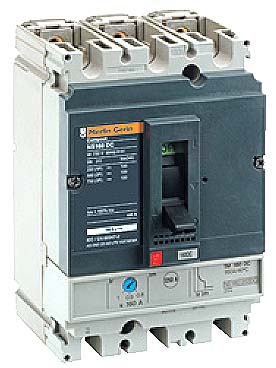
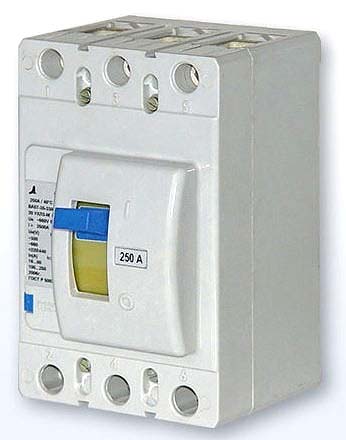
Трехполюсные автоматические выключатели в пластмассовом корпусе
Тематики
Классификация
>>>Обобщающие термины
Синонимы
EN
- MCCB
- moulded case circuit breaker
- moulded case circuit-breaker
- moulded-case circuit breaker
- moulded-case circuit-breaker
DE
FR
Русско-немецкий словарь нормативно-технической терминологии > автоматический выключатель в пластмассовом корпусе
-
2 длительный допустимый ток
- Strombelastbarkeit, f
- Dauerstrombelastbarkeit, f
(длительный) допустимый ток
Максимальное значение электрического тока, который может протекать длительно по проводнику, устройству или аппарату при определенных условиях без превышения определенного значения их температуры в установившемся режиме
[ ГОСТ Р МЭК 60050-826-2009]
Этот ток обозначают IZ
[ ГОСТ Р 50571. 1-2009 ( МЭК 60364-1: 2005)]EN
(continuous) current-carrying capacity
ampacity (US)
maximum value of electric current which can be carried continuously by a conductor, a device or an apparatus, under specified conditions without its steady-state temperature exceeding a specified value
[IEV number 826-11-13]
ampacity
The current in amperes that a conductor can carry continuously under the conditions of use without exceeding its temperature rating.
[National Electrical Cod]FR
courant (permanent) admissible, m
valeur maximale du courant électrique qui peut parcourir en permanence, un conducteur, un dispositif ou un appareil, sans que sa température de régime permanent, dans des conditions données, soit supérieure à la valeur spécifiée
[IEV number 826-11-13]Ampacity, the term is defined as the maximum amount of current a cable can carry before sustaining immediate or progressive deterioration. Also described as current rating or current-carrying capacity, is the RMS electric current which a device can continuously carry while remaining within its temperature rating. The ampacity of a cable depends on:
- its insulation temperature rating;
- conductor electrical properties for current;
- frequency, in the case of alternating currents;
- ability to dissipate heat, which depends on cable geometry and its surroundings;
- ambient temperature.
Electric wires have some resistance, and electric current flowing through them causes voltage drop and power dissipation, which heats the cable. Copper or aluminum can conduct a large amount of current before melting, but long before the conductors melt, their insulation would be damaged by the heat.
The ampacity for a power cable is thus based on physical and electrical properties of the material & construction of the conductor and of its insulation, ambient temperature, and environmental conditions adjacent to the cable. Having a large overall surface area may dissipate heat well if the environment can absorb the heat.
In a long run of cable, different conditions govern, and installation regulations normally specify that the most severe condition along the run governs the cable's rating. Cables run in wet or oily locations may carry a lower temperature rating than in a dry installation. Derating is necessary for multiple circuits in close proximity. When multiple cables are near, each contributes heat to the others and diminishes the amount of cooling air that can flow past the individual cables. The overall ampacity of the insulated conductors in a bundle of more than 3 must be derated, whether in a raceway or cable. Usually the de-rating factor is tabulated in a nation's wiring regulations.
Depending on the type of insulating material, common maximum allowable temperatures at the surface of the conductor are 60, 75 and 90 degrees Celsius, often with an ambient air temperature of 30°C. In the U.S., 105°C is allowed with ambient of 40°C, for larger power cables, especially those operating at more than 2 kV. Likewise, specific insulations are rated 150, 200 or 250°C.
The allowed current in cables generally needs to be decreased (derated) when the cable is covered with fireproofing material.
For example, the United States National Electric Code, Table 310-16, specifies that up to three 8 AWG copper wires having a common insulating material (THWN) in a raceway, cable, or direct burial has an ampacity of 50 A when the ambient air is 30°C, the conductor surface temperature allowed to be 75°C. A single insulated conductor in air has 70 A rating.
Ampacity rating is normally for continuous current, and short periods of overcurrent occur without harm in most cabling systems. The acceptable magnitude and duration of overcurrent is a more complex topic than ampacity.
When designing an electrical system, one will normally need to know the current rating for the following:- Wires
- Printed Circuit Board traces, where included
- Fuses
- Circuit breakers
- All or nearly all components used
Some devices are limited by power rating, and when this power rating occurs below their current limit, it is not necessary to know the current limit to design a system. A common example of this is lightbulb holders.
[http://en.wikipedia.org/wiki/Ampacity]
Тематики
- электротехника, основные понятия
Синонимы
EN
DE
- Dauerstrombelastbarkeit, f
- Strombelastbarkeit, f
FR
- courant admissible, m
- courant permanent admissible, m
Русско-немецкий словарь нормативно-технической терминологии > длительный допустимый ток
-
3 утилизация материалов военного назначения
утилизация материалов военного назначения
—
[ http://www.eionet.europa.eu/gemet/alphabetic?langcode=en]EN
disposal of warfare materials
Disposal of the material remnants of war, which can seriously impede development and cause injuries and the loss of lives and property. The disposal of warfare waste is problematic because it can be highly dangerous, toxic, long-living and requires the utilization of specific and sophisticated technologies, particularly in the case of mines and unexploded bombs which have been left on the war territories. (Source: WPR)
[http://www.eionet.europa.eu/gemet/alphabetic?langcode=en]Тематики
EN
DE
FR
Русско-немецкий словарь нормативно-технической терминологии > утилизация материалов военного назначения
См. также в других словарях:
Case material — Переплётный покровный материал … Краткий толковый словарь по полиграфии
material — I adj. material to (this evidence is material to our case) II n. data 1) to collect, gather material 2) source material 3) about, on (to gather material about the case) 4) material for (to gather material for a dictionary) matter 5) radioactive;… … Combinatory dictionary
material — materialness, n. /meuh tear ee euhl/, n. 1. the substance or substances of which a thing is made or composed: Stone is a durable material. 2. anything that serves as crude or raw matter to be used or developed: Wood pulp is the raw material from… … Universalium
material — ma•te•ri•al [[t]məˈtɪər i əl[/t]] n. 1) cvb the substance of which something is made or composed 2) cvb something that serves as crude or raw matter to be used or developed 3) a constituent element 4) cvb a textile fabric 5) cvb ideas or facts… … From formal English to slang
Case hardening — or surface hardening is the process of hardening the surface of a metal, often a low carbon steel, by infusing elements into the material s surface, forming a thin layer of a harder alloy. Case hardening is usually done after the part in question … Wikipedia
material — ma·te·ri·al 1 /mə tir ē əl/ adj 1: of, relating to, or consisting of physical matter 2: being of real importance or consequence 3: being an essential component the material terms of the contract 4: being relevant to a subject under considerati … Law dictionary
Material Product System — (MPS) refers to the system of national accounts used in the former Soviet Union and the Eastern Bloc countries, as well as in China until 1993 Dr. Fengbo Zhang introduced the Western SNA system and GDP to China, . The MPS has now been replaced by … Wikipedia
Material index — is a concept developed by Alfred Weber in his theory of least cost location. The point of optimal transportation based on the costs of distance to the material index – the ratio of weight to intermediate products (raw materials) to finished… … Wikipedia
material — [mə tir′ē əl] adj. [LL materialis < L materia, MATTER] 1. of matter; of substance; relating to or consisting of what occupies space; physical [a material object, material forces] 2. a) of the body or bodily needs, satisfactions, etc.;… … English World dictionary
material witness — see witness Merriam Webster’s Dictionary of Law. Merriam Webster. 1996. material witness n … Law dictionary
case label — A long strip of heavy paper, cardboard, or other material that shows names or numbers and individual addresses assigned to a lcarrier route. It is placed below the separations on the carrier case. Also, a tag of heavy paper or cardboard on a… … Glossary of postal terms
